Group activities are a crucial factor in the process of developing skills, confidence, social relationships, and independence among People with Disabilities. Most of the NDIS participants consider joining a group program to be a non-threatening way of experiencing new things and getting the trained staff’s support at the same time. Activities can have a tremendous impact on daily life if they are focused on socializing, learning life skills, health improvement, or just having fun.
In this guide, we reveal the Top 10 Group Activities for NDIS Participants in Australia, the way each of them promotes independence, and the reasons that they are highly effective in confidence building and community participation. These activities can be performed by people with different levels of ability, ranging from low to high, so they can be tailored according to the support provided and personal goals.
Strengthening Community through Group Activities for People with Disabilities
Why Group Activities Matter for NDIS Participants
NDIS group programs help participants:
- Build social skills and communicate with others
- Lead a life of your own in terms of learning by actual experience
- Mental and physical health enhancement
- Making new friends and being less lonely
- Adopting new hobbies in an area that is safe and encouraging
- Learn at their own pace with trained support workers
Group activities give participants routine, structure, and the chance to connect with others, something many people value deeply.
1. Social Outings & Community Access Activities
Social outings score as the most sought after group activity in NDIS programs, and the reason for this is that they give participants an opportunity to connect with the community in a gentle and pleasant manner.
Common group outings include:
- Café catch-ups
- Going to the movies
- Visiting local parks, beaches or markets
- Exploring museums, galleries, and tourist spots
- Attending community festivals
- Bowling, mini golf or arcades
Benefits:
- Builds confidence in public
- Encourages communication
- Reduces loneliness
- Helps with community participation goals
These activities keep participants connected with their surroundings.
2. Group Fitness & Outdoor Exercise
It’s a fact that physical fitness is necessary for health, but group fitness programs make the process of being active enjoyable and at the same time social.
Examples include:
- Walking groups
- Swimming
- Gentle gym sessions
- Yoga or stretching
- Outdoor games
Benefits:
- Supports physical health and mobility
- Boosts mood and reduces stress
- Promotes cooperation
- Contributes to the building of healthy habit
Group fitness is open to all, and its safety for everyone is a foremost concern.
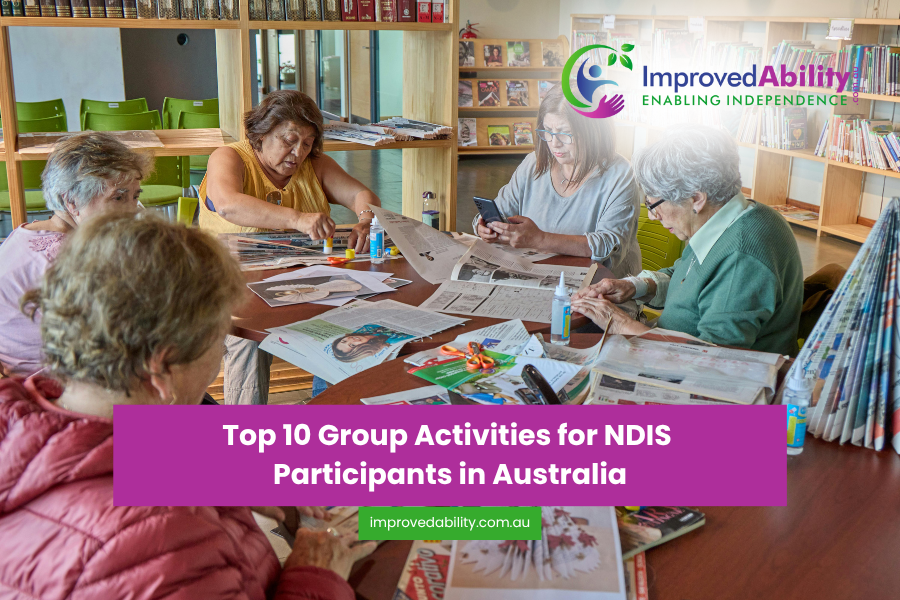
3. Art & Craft Workshops
Working with your hands can be either relaxing, communicative, or a great way to improve your skills.
Participants may enjoy:
- Painting
- Drawing
- Scrapbooking
- Pottery or clay work
- Photography
- Craft making
Benefits:
- Helps with emotional expression
- Improves coordination
- Builds confidence
- Encourages creativity
Art groups also create a calm and friendly environment for social connections.
4. Cooking & Kitchen Skills Classes
Cooking classes impart the know-how that helps the participant to be less dependent on others in the home.
These programs usually cover:
- Following simple recipes
- Safe kitchen skills
- Meal planning
- Healthy eating
- Budget cooking
Benefits:
- Builds independence
- Encourages responsibility
- Supports healthy habits
- Boosts confidence in everyday life
Cooking is also a fun group activity that everyone can enjoy together.
5. Life Skills & Personal Development Groups
Life skills programs help participants learn everyday tasks that support independence.
Skills may include:
- Budgeting and money skills
- Public transport training
- Social and communication skills
- Time management
- Home organisation
- Personal care routines
Benefits:
- Builds long-term independence
- Helps participants reach personal goals
- Encourages responsibility
- Supports daily living skills
These programs are highly valuable for participants working toward independent living.
6. Music, Dance & Drama Groups
Creative performance activities help participants express themselves in fun and meaningful ways.
Group sessions may include:
- Singing
- Drumming or music therapy
- Dance classes
- Drama workshops
- Simple performing arts activities
Benefits:
- Boosts confidence
- Improves coordination
- Supports emotional wellbeing
- Encourages group bonding
These groups are usually full of energy, fun, and laughter.
7. Gardening & Outdoor Nature Activities
Gardening helps participants relax and connect with nature.
Activities may include:
- Planting herbs, flowers, or veggies
- Caring for plants
- Creating small garden beds
- Nature walks
- Simple outdoor projects
Benefits:
- Reduces stress
- Encourages responsibility
- Supports physical movement
- Builds patience and routine
Gardening is gentle, calming, and suitable for many ability levels.
8. Technology & Computer Skills Groups
Technology skills are important for everyday life. Group programs help participants learn in a simple, supported way.
Skills may include:
- Using smartphones and tablets
- Online safety
- Basic computer skills
- Using apps for communication
- Gaming and digital creativity
Benefits:
- Builds digital independence
- Helps with work or study goals
- Improves problem-solving
- Supports social connection
These programs help participants feel confident and safe when using technology.
9. Day Trips & Travel Training Activities
Many NDIS group programs include longer day trips that give participants a chance to explore new places.
Examples include:
- Sydney attractions
- Beach days
- Wildlife parks
- Shopping centres
- Local sightseeing
- Scenic drives
Benefits:
- Builds travel confidence
- Helps participants practice public transport
- Supports independence
- A trip is a fun and memorable experience
For people, these trips can sometimes result in a change in their whole life, especially for the ones who like more freedom.
10. Group Learning & Educational Workshops
Learning activities are conducted in a friendly and supportive group atmosphere where the participants get to be the winners by acquiring new skills.
The workshops may have various topics like:
Mindfulness and relaxation
Developing healthy habits
Basic literacy and numeracy
Job preparation
Communication skills
Benefits:
- Builds confidence
- Supports long-term personal goals
- Encourages positive habits
- These workshops give the participants freedom to develop their skills slowly
The workshops are so powerful that they empower the participants as well as build strong foundations for independence.
Group Activities Help NDIS Participants Grow, Connect & Thrive
Group activities can bring about great and very good changes in the lives of people with disabilities that are supported by NDIS. It may be a person who wants to have friends, get good at doing things alone, become healthier, or just have a good time, their goal and capability will find a corresponding group of activities.
When given the appropriate help, the participants can experience new things, meet in a significant way with others, and be sure of themselves in a safe and motivating space.
Are you in search of NDIS group activities in Sydney that are supportive and engaging? Contact Improved Ability today to learn how we can help empower independence and create meaningful social connections.
Frequently Asked Questions
NDIS Group & Centre-Based Activities — Everything You Need to Know
-
Q01
What are NDIS group and centre-based activities?
NDIS group and centre-based activities are social sessions held at a specific facility or hub. They allow participants to try new hobbies, like art or cooking, in a safe and accessible space. These groups focus on building social skills and making friends with others who have similar interests.
-
Q02
Can adults join NDIS group activities?
Yes. There are many NDIS group activities for adults that focus on mature goals. These often include life-skill workshops, travel training, and social outings. These groups are a great way for adults to gain independence and reduce social isolation.
-
Q03
Does the NDIS cover the cost of tickets or meals?
The NDIS usually pays for the support worker's time to help you attend the activity. However, you are generally responsible for your own out-of-pocket expenses. This includes things like movie tickets, cafe meals, or entry fees to Sydney attractions.
-
Q04
How do group activities help people with disabilities?
Group activities for people with disabilities are designed to build confidence. By practicing social skills in a group, participants learn how to communicate better and work as part of a team. This makes it easier to feel included in the wider community.
-
Q05
Which NDIS budget is used for social groups?
Most NDIS group centre-based activities are paid for using your Core Supports budget (Assistance with Social, Economic and Community Participation). If you are learning a specific skill, you might also use your Capacity Building budget.
-
Q06
Do I need a referral for NDIS group activities in Sydney?
You do not need a formal doctor's referral. If you have the correct funding in your NDIS plan, you can simply contact a provider like Improved Ability. We will check your goals and find a group that matches your interests and location.