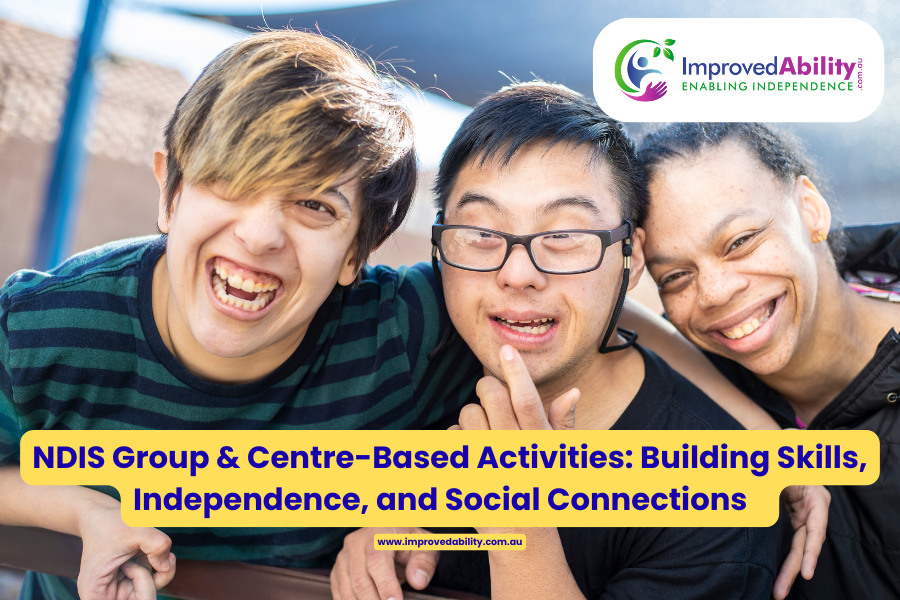
Living with a disability should never mean missing out on social connections, learning opportunities, or fun experiences. The NDIS (National Disability Insurance Scheme) helps people take part in activities that build independence, skills, and friendships. One of the most popular services is group centre activities NDIS participants can join across Sydney and beyond.
What Are NDIS Group Activities?
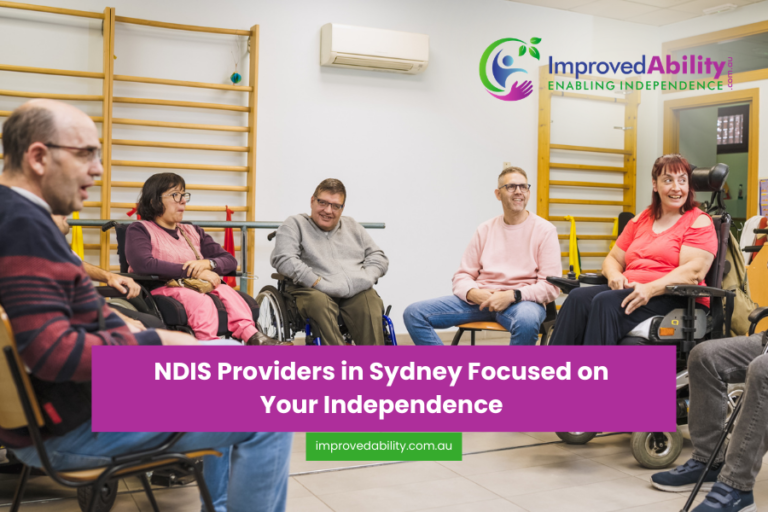
NDIS group activities are programs designed for people with disabilities to join others in safe, structured environments. These can take place in a community centre, at a provider’s facility, or out in the community.
They do not merely constitute entertaining field trips. The Centre-based and group activities assist individuals in gaining independence, bettering life skills, and enhancing social affiliations. The assistance is designed in a way that each would be able to be involved at their pace.
This can be a creative workshop and cooking lessons, sports, outings or even learning new everyday living together. These group activities become the highlight of the week of many participants.
Group Programs Aren’t Just for Participants — Here’s What They Mean for Families and Carers
Benefits of Group & Centre-Based Activities
Taking part in group centre activities NDIS offers a wide range of benefits, including:
- Building Social Connections
A large group of the disabled feel isolated. Group work promotes socializing with new people, friends, and exchange of experiences. - Developing Skills
Whether it’s cooking, art, or using public transport, group and centre based activities NDIS programs are designed to teach useful life skills. - Boosting Confidence
Giving new activities in a non-judgmental group will allow the participants to be confident and autonomous. - Improving Wellbeing
Engaging in activities makes one run and happy. - Encouraging Community Participation
Group activities usually consist of community outings so as to make the participants feel like they are part of the group.
These programs also bring peace of mind to the families and carers, who are sure their loved one is safe, active, and involved in the program.
Examples of NDIS Group Activities
The NDIS group activities are numerous and thus people are free to choose the ones that meet their interests and target. Examples of these may include:
- Cooking and Meal Preparation – know how to plan, cook and prepare simple and healthy meals.
- Arts and Crafts – sessions in which they can paint and draw or create a craft.
- Sports and Fitness – mild physical activity, sporting activities or dance lessons to remain in motion.
- Life Skills Workshops -how to budget, clean or utilise technology through coaching.
- Music and Drama – developing self-confidence by performing and creating.
- Community Outings – visiting local parks, museums, shops, or events to enjoy new experiences.
Every activity will be enjoyable, inclusive, and based on the capacities of people. This is all aimed at striking a balance between learning and having fun.
How Are These Activities Funded by the NDIS?
Many people ask how NDIS group centre activities are paid for. The good news is that these activities are usually covered in an NDIS plan. Funding can come from Core Supports, which help with daily activities and community participation, or Capacity Building Supports, which focus on learning skills and independence.
When setting up or reviewing an NDIS plan, you can talk with your planner or Local Area Coordinator (LAC) about your goals. If becoming more independent and making friends are part of your goals, then group and centre-based activities can often be added to your NDIS funding.
Choosing the Right Group Activities Provider
Not all providers are the same, so it’s important to choose one that meets your needs. When looking for group activities NDIS programs, consider:
- Variety of Activities – Does the provider offer programs that match your interests?
- Qualified Staff – Are the support workers trained and caring?
- Safe Environment – Is the centre accessible and supportive?
- Flexibility – Can the activities be adjusted to suit your needs and goals?
- Location – Is the centre convenient and within your community?
At Improved Ability, we design programs that are person-centred, flexible, and focused on both fun and growth. Our team is passionate about helping participants reach their full potential.
Conclusion
Group centre activities NDIS programs are about much more than filling time. They help people with disabilities build independence, learn useful skills, and connect with others in a safe, supportive space. From cooking and art to outings and sports, there’s something for everyone.
At Improved Ability, we are proud to deliver group and center-based activities NDIS participants can enjoy across Sydney. Our programs are tailored to individual needs, with a focus on fun, inclusion, and personal growth.
If you or your loved one is looking for the right provider, get in touch with Improved Ability today. Together, we can build independence, create connections, and make every activity a step toward a brighter future.
Frequently Asked Questions
NDIS Group Skill-Building Programs Sydney — Everything You Need to Know
-
Q01
How do Sydney NDIS providers typically design a skill progression plan for group centre-based participants?
Sydney NDIS providers typically design skill progression plans by conducting an initial goal-setting intake, identifying skill gaps, and mapping a structured learning pathway across short, medium, and long-term milestones aligned with the participant's NDIS plan goals in New South Wales.
-
Q02
What happens when a Sydney NDIS participant plateaus and stops progressing in their group skill-building program?
When a Sydney participant plateaus in their group skill-building program, providers typically review the activity structure, adjust the difficulty level, introduce new skill challenges, or explore whether a different program format would better support continued progress across New South Wales.
-
Q03
How do NDIS group skill-building programs in Sydney accommodate participants with different learning styles?
Sydney NDIS group skill-building programs typically accommodate different learning styles by offering visual demonstrations, hands-on practice, verbal instructions, and written guides within the same session. As of 2026, reputable New South Wales providers generally conduct a learning preference assessment before skill-building commences.
-
Q04
Can skill-building outcomes from NDIS group centre-based activities be used as evidence at a Sydney participant's plan review?
Yes, skill-building progress reports from NDIS group centre-based activities in Sydney can generally be submitted as supporting evidence at a plan review. As of 2026, New South Wales participants who demonstrate measurable skill gains typically use these reports to justify continued or increased Capacity Building funding.
-
Q05
How do Sydney NDIS group skill-building programs teach participants to apply new skills independently outside the centre?
Sydney NDIS group skill-building programs typically use a teach-practice-apply model — introducing skills in the centre, practising them in simulated scenarios, then generalising them in real community settings across New South Wales to ensure participants can apply skills independently in everyday life.
-
Q06
What happens to skill-building goals if a Sydney NDIS participant's disability condition changes during their program?
If a Sydney participant's condition changes during their skill-building program, providers typically conduct a reassessment and adjust the skill-building goals accordingly. As of 2026, New South Wales providers are generally required to notify the participant's Support Coordinator of any significant changes in functional capacity during the program.
-
Q07
How do parents and carers in Sydney typically stay informed about their family member's skill-building progress in group programs?
Parents and carers of Sydney NDIS participants in group skill-building programs are generally kept informed through regular progress reports, informal verbal updates after sessions, and formal goal review meetings. Reputable New South Wales providers typically offer family involvement options while still respecting the participant's right to privacy and independence.
-
Q08
Can a Sydney NDIS participant transition from group skill-building activities to independent community participation over time?
Yes, transitioning from group skill-building activities to independent community participation is generally the long-term goal for many Sydney NDIS participants. As of 2026, New South Wales providers typically plan this transition gradually — reducing support levels incrementally as the participant demonstrates consistent skill mastery and confidence.